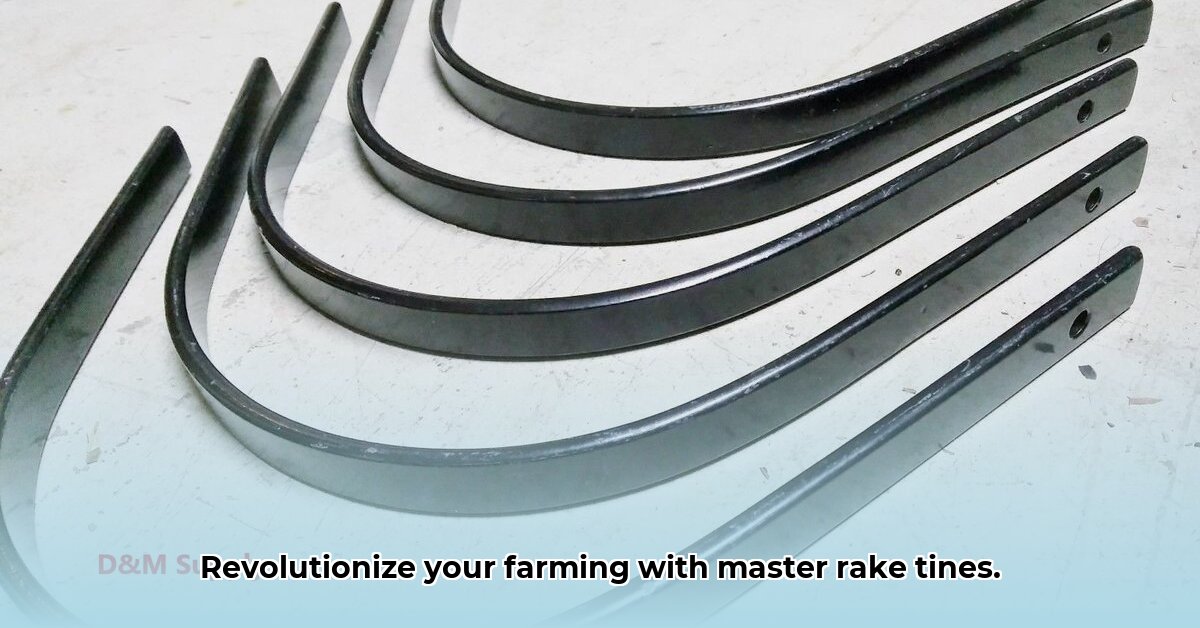
Selecting the Right Rake Tines for Sustainable Agriculture
Choosing the right tractor rake tines significantly impacts your haymaking efficiency and environmental footprint. This guide provides actionable steps to optimize your rake selection, usage, and maintenance for a more sustainable farming practice. Do you want to improve your farm's productivity while minimizing your environmental impact? Let's explore how the right tines can help achieve that. For more detailed information on three-point tractor rakes, check out this helpful resource.
Tine Material: Balancing Durability and Sustainability
The material of your rake tines directly impacts their longevity and environmental impact. Traditional high-carbon steel tines are robust and readily available, but their production is energy-intensive. Recycled steel offers a more sustainable alternative, boasting similar durability with a reduced carbon footprint. However, availability might vary depending on your location.
Innovative bio-based composites, made from renewable resources, represent a promising advancement in sustainable agriculture. While potentially offering lower energy consumption and reduced carbon emissions, these options may currently have shorter lifespans compared to steel. Thoroughly weigh the long-term cost-effectiveness and durability before switching to these newer materials. Ongoing research continues to explore even more eco-friendly alternatives. Don't hesitate to stay updated on the latest advancements.
Matching Tine Design to Your Soil and Crops
Rake tine design considerably influences its interaction with the soil and harvested material. Wide tines generally excel with lighter, drier hay, whereas narrower tines are better suited for denser vegetation. Selecting inappropriate tines can reduce efficiency and potentially damage your equipment. Regular inspection is vital to ensure your tines remain suitable for the prevailing conditions and your specific needs. Different soil types – sandy versus heavy clay – will require different tine designs for optimal performance.
Optimizing Rake Usage for Efficiency and Soil Health
Efficient operation is paramount for sustainable haymaking. Avoid overloading the rake, as this stresses the tines, leading to damage and reduced efficiency. Proper tine height adjustment is crucial to prevent soil compaction, protecting soil health and long-term productivity. Regular maintenance, including lubrication, significantly extends equipment lifespan, minimizing waste. Consider the impact of different techniques on both immediate yield and long-term soil health. How can you maximize hay collection while preserving soil quality?
Maintaining and Repairing Your Tines: A Sustainable Approach
Regular inspections are key to extending tine lifespan. Sharpen or replace worn tines promptly to maintain smooth operation and prevent further damage. Repairing tines whenever feasible is far more sustainable than immediate replacement, saving costs and reducing landfill waste. Preventative maintenance is cost-effective and environmentally responsible. A proactive approach can greatly extend the operational lifespan of your equipment.
A Step-by-Step Guide to Sustainable Rake Tine Management
- Assess Your Needs: Identify your primary farming practices (e.g., hay production, soil leveling) and soil type.
- Choose the Right Material: Select tines made from recycled steel or explore bio-based composites, weighing their durability against their environmental benefits.
- Select Appropriate Tine Design: Opt for wide tines for lighter hay and narrower tines for denser vegetation, ensuring compatibility with your soil type.
- Optimize Rake Operation: Avoid overloading and adjust tine height to minimize soil compaction. Regularly inspect and maintain your equipment.
- Prioritize Repair Over Replacement: Repair damaged tines whenever possible to extend their lifespan and reduce waste.
- Stay Informed: Keep abreast of the latest advancements in sustainable rake tine technology and materials.
Key Takeaways:
- Material Matters: Consider the environmental impact and durability of different tine materials. Recycled steel and bio-based composites offer more sustainable options.
- Design for Efficiency: Choose tines suited to your specific soil and crop conditions.
- Maintenance is Key: Regular inspection, lubrication, and timely repairs extend tine life and reduce waste.
This guide provides a framework for selecting and managing tractor rake tines sustainably. By implementing these strategies, you can contribute to both efficient haymaking and environmental stewardship. Remember, sustainable farming is an ongoing process of learning and adaptation.
Tractor Rake Tines
Content about tractor rake tines (Auto-generated fallback due to API error).
Tractor Rake Tines
Content about tractor rake tines (Auto-generated fallback due to API error).